

Human Gravity & the New Consumer Equation
Part 3 of 4: A series on shifting power dynamics behind brand trust

In Part 2, we examined how overlapping system pressures have created what might best be described as a trust recession. The result of that pressure: In low-trust environments, people move toward humans.
Toward creators over corporations.
Toward lived experience over institutional messaging.
Toward community validation over top-down authority.
This is one of the defining cultural shifts of the modern era.
Influencers are often misunderstood as merely entertainment figures, opportunistic monetizers or attention brokers. In reality, they function as emotional trust intermediaries. Their power comes less from reach and more from perceived proximity.
And its not even all about “authenticity” - a commonly used buzz word to chase over the past decade. It is more than that. Consumers trust people who feel:
accessible and consistent (meeting them where they are, at the top of their feeds)
relatable and emotionally legible (colloquially familiar with shared languages)
socially validated (mirroring with proven support and momentum around them)
Marketing leaders take note: This is why highly polished corporate messaging increasingly struggles to create belief on its own. Scale no longer guarantees credibility. In many cases, it creates suspicion.
Consumers increasingly want proof before promise. Experience before positioning. Participation before persuasion. And with the ride of user generated content and participatory ecosystems like sports betting and prediction markets, there is real momentum in the market for participation over passive consumption.
The future of trust is relational, and a core reason why trust in reviews on Amazon is out while impulse purchases based on TikTok shops are skyrocketing.
This shift is reshaping spending behavior in ways traditional economic models often fail to fully explain. Consumers are not simply “trading down” because of inflation. Nor are they spending irrationally when they selectively splurge.
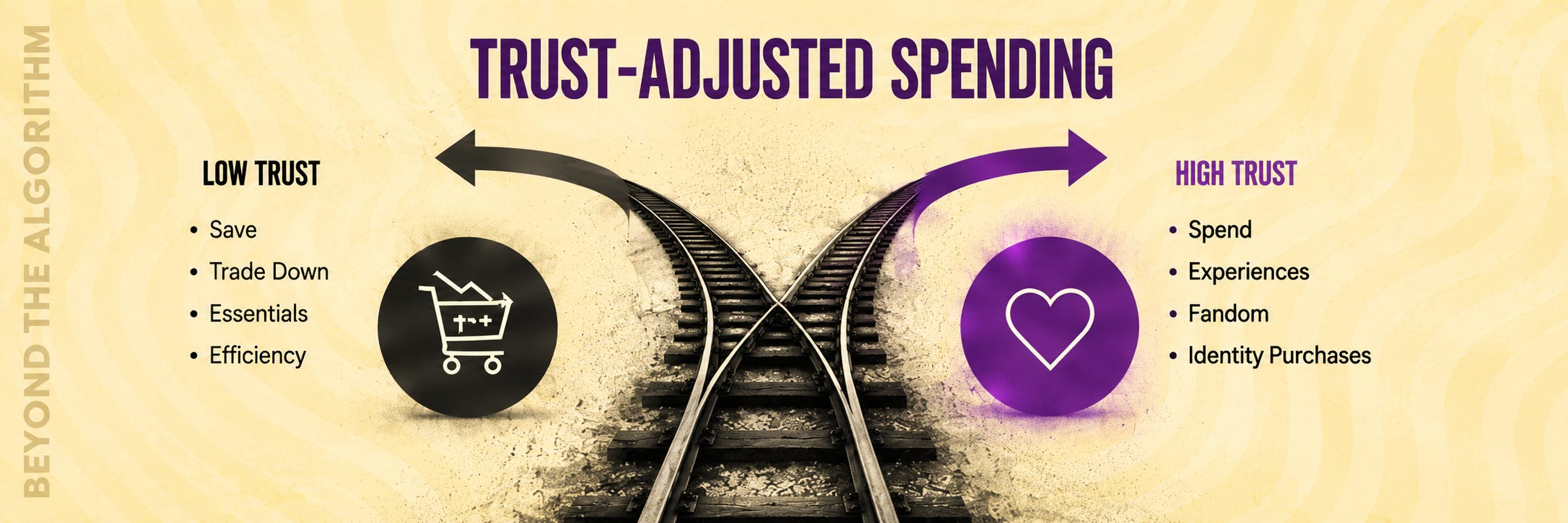
They are reallocating trust, and with a reallocation of trust, their dollars follow.
They save where trust is weak. They spend where trust feels emotionally grounded.
This explains patterns we see in our own data, that consumers may simultaneously:
Cut household spending while investing heavily in fandom…
Buy private label groceries while paying premium prices for creator-driven products…
Cancel subscriptions off and on while spending aggressively on experiences that create identity, belonging, or emotional resonance…
Brand leaders take note: The old equation of activating trust for a brand looked something like this:
Brand Reputation + Messaging = Belief
The new equation is evolving into something fundamentally different:
Proximity + Proof + Participation = Belief
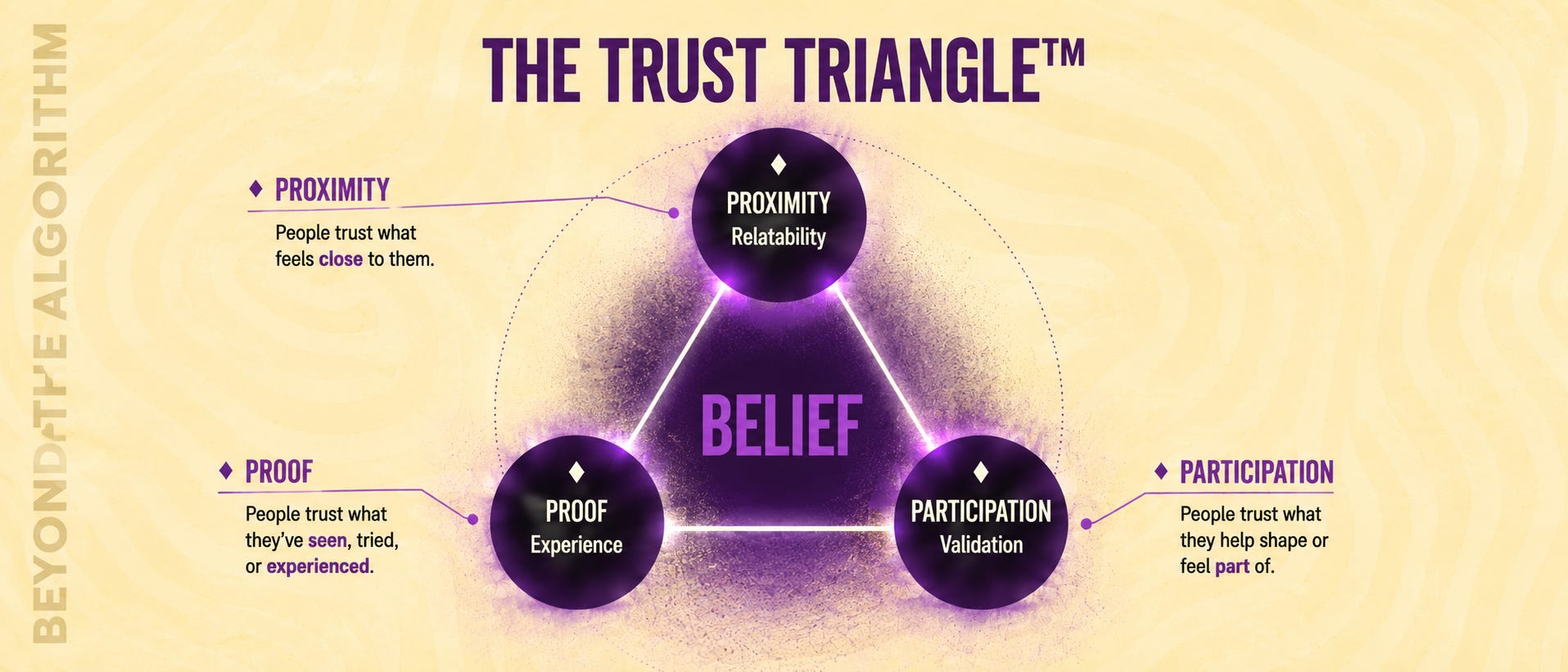
In this new Trust Triangle™ not only do we have to rethink what we measure, but we need to rethink how we engage with consumers across platforms.
Proximity tells us we have to return to a mindset of consumer closeness: finding opportunities for deep relatability, emotional accessibility, human texture.
Proof forces us to think beyond brand reputation and belief but to advocacy, consistency, transparency, and tangible value.
Participation requires us to think not just about individual audience targeting but tapping into worlds of collectivism, community, identity & social reinforcement.
So, while our Brand Trust Pillars may help us diagnose and act on trust operationally, our Trust Triangle will help us understand the fundamentals behind strategies and tactics that need to be true for those changes to be effective.
Learn more about CMB’s Brand Trust Pillars
COMING NEXT: The final chapter
In Part 4, we’ll look at the emergence of algorithmic awareness, as consumers begin to see the invisible architectures behind attention, influence, and identity itself.
Perspectives shaped by: Sasha McCune and Ethan Rix at CMB, a leading strategic insights consultancy
Want to talk more about these changing tides? Reach out on LinkedIn